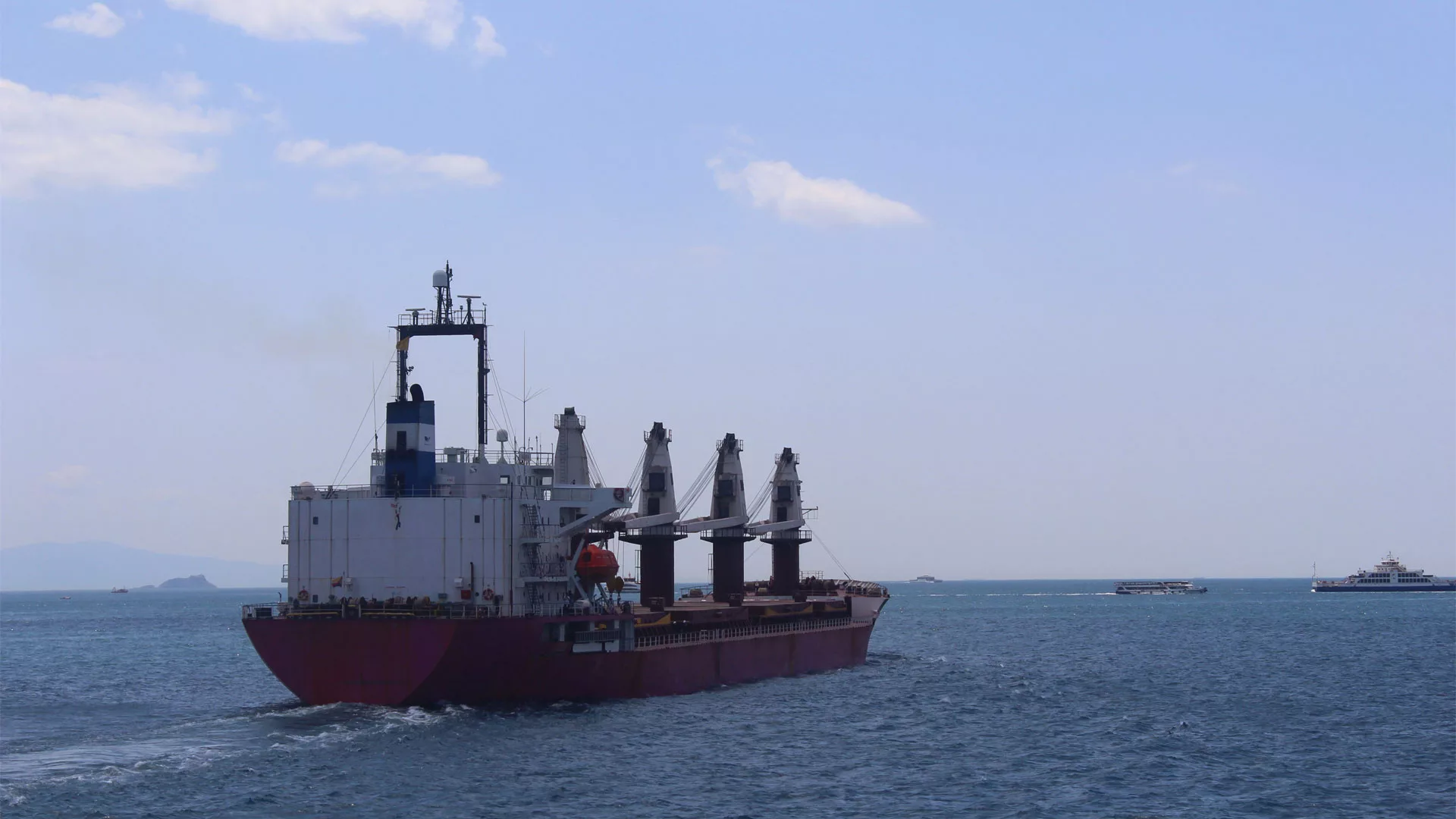
Portable gas detectors on board ships must comply with SOLAS Chapter II-2 and the revised IMO Resolution MSC 581(110), which together set the framework for which gases must be detected, how equipment must be maintained, and which certifications are required. The most important update in 2026 is that legacy “4-in-1” detectors – which measure LEL, O2, CO, and H2S – no longer cover all required gases, because CO2 detection is now explicitly mandated before entering enclosed spaces. Below, we answer the most common questions fleet engineers and technical superintendents ask about portable gas detector compliance.
Which SOLAS regulations apply to portable gas detectors?
Portable gas detectors on ships fall primarily under SOLAS Chapter II-2 (fire protection, detection, and extinction) and SOLAS Chapter III (life-saving appliances and arrangements). In 2026, the most relevant update comes from IMO Resolution MSC 581(110), which replaced the older Resolution A.1050(27) and introduced a significantly stricter framework for enclosed space entry – the primary context in which portable gas detectors are used.
MSC 581(110) adopts a “Closed-Loop Management” philosophy: safety must be verifiable, continuously monitored, and documented. This means atmospheric testing is no longer just a pre-entry formality. Gas readings must be recorded, re-tested after breaks, and logged in a way that Port State Control inspectors can verify. An unrecorded test is treated as a test that never happened.
Classification societies such as DNV, Lloyd’s Register, and Bureau Veritas also issue their own guidance that builds on SOLAS requirements. These rules interact with flag state requirements, so the applicable standard for any given vessel depends on its flag, trading area, and class. That said, MSC 581(110) sets the international baseline that all compliant vessels must meet.
What types of gases must portable detectors be able to detect?
Under MSC 581(110), portable gas detectors used for enclosed space entry must be capable of testing for four distinct gases: oxygen (O2), flammable gases (measured as LEL), carbon monoxide (CO), and carbon dioxide (CO2). Entry into an enclosed space is only permitted when CO2 levels are confirmed below 0.5% (5,000 ppm).
This is where many vessels face a compliance gap. The industry has long relied on “4-in-1” detectors that measure LEL, O2, CO, and hydrogen sulfide (H2S). These instruments are still useful, but they cannot detect CO2, which means they no longer satisfy the full requirements of MSC 581(110) on their own. Ships relying solely on legacy 4-in-1 units may fail a Port State Control inspection.
The practical solution is either a “5-gas” detector that includes a CO2 sensor alongside the standard four gases, or a combination of instruments that together cover all four required gases. When evaluating options, check whether the replacement detector is compatible with your existing calibration equipment and gas cylinders – switching sensor technology often means updating your entire calibration setup as well. Our fire and gas detection range includes units that cover all four required gases.
How often must portable gas detectors be tested and calibrated?
Portable gas detectors must undergo bump testing before each use and full calibration at intervals specified by the manufacturer – typically every three to six months, though this varies by sensor type and operating environment. MSC 581(110) strengthens documentation requirements significantly: all test results must be formally recorded and available for inspection.
Beyond routine calibration, the resolution requires that atmospheric tests before enclosed space entry are re-performed whenever the work team takes a break or ventilation is interrupted. The entry permit – which now carries a maximum validity of 8 hours – becomes void the moment ventilation stops, and a fresh atmospheric test must be completed and recorded before re-entry.
Enclosed space drills, which must now be conducted at least once every two months, must include practical use of atmospheric testing instruments. This means crew must be familiar with operating the detector under realistic conditions, not just mustering at a designated point. Calibration records and drill logs are among the first documents a Port State Control inspector will request.
Regular service and calibration of portable detectors helps ensure your instruments remain accurate and your documentation stays inspection-ready.
What certifications must a portable gas detector hold for SOLAS compliance?
A portable gas detector used in SOLAS-regulated applications must hold type approval from a recognized classification society or flag state authority. Common approvals include those issued by DNV, Lloyd’s Register, Bureau Veritas, and similar bodies. The specific approval required depends on the vessel’s flag state and class requirements.
Beyond type approval, look for the following certifications depending on the intended use environment:
- ATEX or IECEx certification – required for use in potentially explosive atmospheres (relevant for most enclosed spaces on tankers and gas carriers)
- IMO/SOLAS compliance marking – confirming the unit meets the performance standards referenced in the applicable resolutions
- Calibration certificate – issued at the time of last calibration, showing the gases tested and the results
When sourcing a replacement detector, always verify that the certification covers the specific gases you need to measure. A unit approved for LEL and O2 detection only does not automatically qualify for CO2 monitoring under MSC 581(110). Ask the supplier for the full approval documentation before purchasing.
What happens if a portable gas detector fails a port state control inspection?
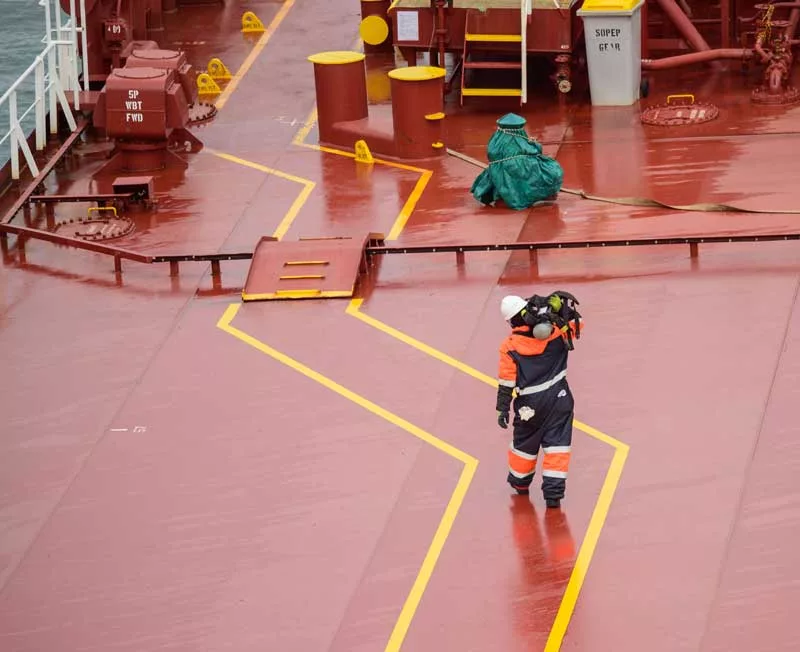
If a portable gas detector fails a Port State Control (PSC) inspection – whether due to missing certification, inadequate gas coverage, poor calibration records, or a faulty instrument – the inspector can issue a deficiency notice or, in serious cases, a detention order. A detained vessel cannot leave port until the deficiency is resolved, which means every hour of delay has a direct financial cost.
Common reasons portable gas detectors fail PSC inspections include:
- The detector does not cover all four gases required by MSC 581(110)
- Calibration records are missing, incomplete, or outdated
- The instrument has expired certifications or no type approval
- Bump test results before the most recent enclosed space entry were not recorded
- The detector is visibly damaged or fails a functional check during the inspection
Inspectors treat an unrecorded atmospheric test as a test that did not occur. If your logbook cannot demonstrate that testing was performed and results were acceptable, the assumption is that the procedure was skipped – regardless of what actually happened on board.
When should an outdated portable gas detector be replaced rather than repaired?
An outdated portable gas detector should be replaced rather than repaired when it cannot be upgraded to detect all four gases required by MSC 581(110), when spare parts or sensor elements are no longer available, or when the cost of repair and recertification approaches the cost of a new compliant unit. Age alone is not the deciding factor – capability and certification are.
Specifically, consider replacement when:
- The unit is a legacy 4-in-1 detector with no CO2 sensor and no upgrade path
- The manufacturer has discontinued sensor elements or calibration gas compatibility
- The unit cannot be recertified by a recognized body after repair
- The instrument’s firmware or electronics cannot be updated to meet current logging requirements
- Repair costs exceed roughly 50-60% of a new unit’s price
When replacing a detector, compatibility with your existing setup matters. Check whether the new unit works with your current calibration gas cylinders, docking station, and data logging software. A detector that requires an entirely new calibration ecosystem adds cost and training time that should factor into the decision.
For vessels with older installations, refurbished or reconditioned detectors from reputable suppliers can offer a cost-effective middle ground – provided they carry current certifications and cover all required gases.
How Lavastica helps with portable gas detector compliance
At Lavastica, we work with fleet engineers and technical superintendents who need compliant, compatible gas detection equipment delivered quickly – often while a vessel is already in port. Here is what we offer:
- Gas detectors covering all four required gases (O2, LEL, CO, and CO2), including units suitable for ATEX-classified environments
- Replacement units for obsolete or discontinued models, with advice on compatible alternatives that integrate with your existing calibration setup
- Calibration and service in our in-house workshop, with full documentation for Port State Control inspections
- Fast worldwide delivery from our Rotterdam warehouse, minimizing port downtime
- Technical advice on which detectors meet the requirements of MSC 581(110) and your specific flag state or classification society
Need help finding the right detector or getting your current equipment recertified? Learn more about us or get in touch with our team directly. We respond quickly because we know port time is not cheap.
Phone: +31 (0) 10 265 5070
Email: info@lavastica.com